Sean Cooney - Peter’s Field
2026 studio album
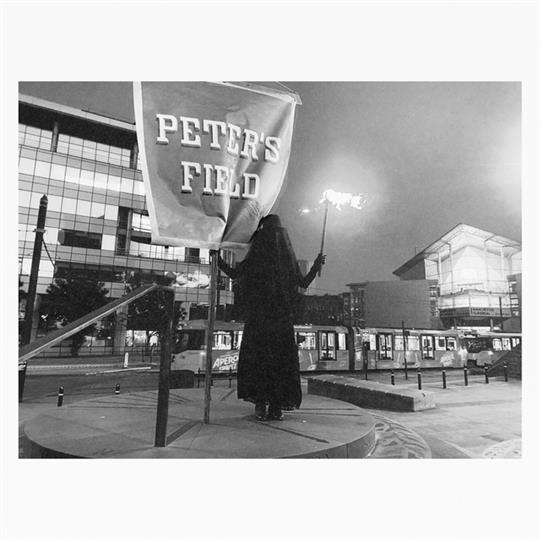
the bright young folk review
On Monday 16th August, 1819, an estimated 60,000 people gathered at St Peter’s Field in Manchester to demand the reform of parliamentary representation and to hear celebrated radical speaker Henry ’Orator’ Hunt. Many had walked many miles from all across Lancashire, were unarmed, wore their best clothes, brought their children with them and sang patriotic songs.
On the orders of local magistrates, the Manchester and Salford Yeomanry Cavalry were sent into the crowd to arrest Hunt and other speakers. They were, in turn, followed by the 15th Hussars, who were ordered to clear the field. Eighteen people died as a result and as many as 700 were injured, the incident initially labelled ’the Peterloo massacre’.
To mark the occasion, Peter’s Field was premiered on 16th August, 2024, at FolkEast Festival in Suffolk on the 205th anniversary and now has been recorded for posterity on an album on which Cooney from The Young Uns is joined by Eliza Carthy and Sam Carter with Jennifer Reid acting as narrator.
Divided into two acts, it begins with the brief intro of Chalice (Street Song) with a drunken Prince Regent setting the backdrop of contemptuous indifference before taking The Road To Peter’s Field, Reid narrating the scene and Cooney and Carter sharing verses as grievances and intent are laid out to a jig-shaded tune and the refrain “So rise up in the morning/Rise and come with me/And by the next day’s dawning/We’ll have liberty”.
MP has Reid speaking of the workers’ lack of parliamentary support giving way to the steady, doomily-strummed intro to the five-minute Prinny, scathingly addressed to the Prince Regent, where Reid speaks of the March of the Blanketeers two years earlier by the cotton workers to petition the Crown. Carthy’s lurching fiddle and vocals relate the starvation conditions in which families had to exist and takes a swipe at the Regent’s marital options and courtly extravagance while “the people are dancing in radical rags”.
The Blanketeers being arrested before even leaving Manchester and Lord Liverpool’s gagging acts were a foreshadowing of what would come, the Home Secretary writing “the country will not be tranquillised until blood shall have been shed either by the law or the sword”.
Set to a semi tango rhythm, Magistrates talks of how those holding the power and wealth suppressed dissent and how the magistrates enlisted a volunteer defence force to implement its enforcement though the real bogey man was, as told in the staccato rhythm Nadin, the Deputy Constable.
Cooney sings ragtime-like tune Radical Rags which, again addressing poverty, references Christ in the temple and ill-fated activists John Ball, the English priest who took a prominent part in the Peasants’ Revolt of 1381, Gerrard Winstanley of The True Levellers and Tom Paine, Their mention sets up the introduction of the fiddle-backed fingerpicked and plucked banjo on Henry Hunt and the titular behatted Orator, sung by Cooney with Reid’s interpolations.
Joining him on the hustings and subject of the next bluesy folk number was radical reformer Sam Bamford, the jaunty, fiddle-led Mrs Reform sung by Carthy noting the role women played in reform societies across Lancashire, the first being The Blackburn Female Reform Society founded by Alice Kitchen and advocating for a one family one vote system. Needless to say, they met with derision in the press.
In July 1819, the Manchester Female Reform Society was founded with Susanna Saxton as secretary and Mary Fildes as its Irish-born president. The eponymous track, again sung by Carthy with a fiddle solo, noting how, “with banners high and courage keen/To Peter’s Field they came”.
Reid picks up the narrative with Cooney robustly singing Henry Hunt II, describing how men of the 15th Hussars and the Yeomanry Cavalry were positioned nearby awaiting the arrival of his carriage. The baton passes to Carthy for Fox Robin presaging the massacre to come as William Hulton, the leading magistrate, declared “the town to be in danger and the peace broken”. The Hussars and the cavalry duly drew swords and galloped off, the rhythmically urgent The Monkey And The Mare observing how the latter were so drunk they had no idea what they were doing. Reid tells how Fildes’ child was thrown from her and killed, the troops hacking their way through the crowd, with Nadin arresting Hunt.
Four short pieces follow, capturing the bloody chaos, the women in particular bearing the brunt of the ferocity, climaxing with Carthy’s mournful lament to Mary Fildes who managed to slip away. Sung by Carter, Thomas Shelmerdine records the brutal extent of the savagery recounting how, despite her pleas, the soldier in question cut down one Mrs Goodwin.
The rest of the album picks up the story after the carnage, the swaying John Brierley’s Cheese telling of how he survived the horses hooves because he kept cheese under his hat, the fingerpicked Names simply recounting those of the dead and the broken victims, John Lees concerning a former soldier who survived Waterloo only to die in Manchester, murdered by those he once fought beside.
Following Reid narrating “’my lord I have been commanded by his Royal Highness to request that you will express to the magistrates of Manchester the great satisfaction derived from their prompt, decisive and efficient measures for the preservation of the public tranquility”, it ends with two reprises, Chalice II and Sam Bamford II recording their sentences for “inciting the subjects of the King to contempt and hatred of the government”. Reid narrates how all the yeomanry were acquitted in a civil case but, eventually, the aims of the Peter’s Field meeting were brought to fruition, Manchester getting its first two MPs, one being Hunt.
Juxtaposing verse and narration, it closes with Dream of Peterloo telling of the fates of Bamford who became a poet, and Fildes, who had four more children, naming two after Paine and Hunt, her grandson Luke becoming one of the most celebrated painters in Victorian Britain, his work depicting the conditions of the poor.
Cooney’s final words sound across the ages for activists who still work for freedom and equality “There’s a song still to be sung/There’s a future to be won/Though you are a tiny seed/May you bloom on Peter’s Field”. It’s an outstanding album.
Mike DaviesReleased on March 23 by Alimentation and Hudson Records supported by Sound Roots and Arts Council England and The Rochdale development fund. The book is the script and narrative of the entire Peterloo massacre and comes with CD and full download. Produced by Andy Bell.
1. Chalice
2. The Road to Peter’s Field
3. MP
4. Prinny
5. Magistrates
6. Nadin
7. Radical Rags
8. Henry Hunt
9. Sam Bamford
10. Mrs Reform
11. Mary Fildes
12. Henry Hunt II
13. Fox Robin
14. The Monkey Rides the Mare
15. Hulton’s Opera Glasses
16. Sam Bamford II
17. The Monkey Rides the Mare II
18. Mary Fildes II
19. Thomas Shelmerdine
20. The Monkey Rides the Mare III
21. John Brierley’s Cheese
22. Names
23. John Lees
24. Chalice II
25. Sam Bamford III
26. Dream of Peterloo